Portfolio Variance Management Techniques for Sports Betting and Table Games

Operators who combine sports betting with table games face distinct variance patterns because each category responds differently to market movements and player behavior. Sports wagers often carry higher short-term swings driven by single events while table games produce steadier but lower-percentage returns over repeated plays. Research indicates that blending the two requires deliberate adjustments to exposure levels so that overall portfolio volatility stays within acceptable bounds.
Core Differences in Variance Profiles
Sports outcomes cluster around key variables such as team form, weather, and officiating decisions, whereas table game results follow established probability distributions that operators can model with greater precision. Data from multiple jurisdictions shows that soccer match results exhibit standard deviations roughly twice those observed in blackjack sessions when measured over equivalent bankroll units. Those who study these patterns note that the higher dispersion in sports creates opportunities for rapid drawdowns that table game volume can partially offset when allocations remain properly weighted.
Correlation Analysis Across Categories
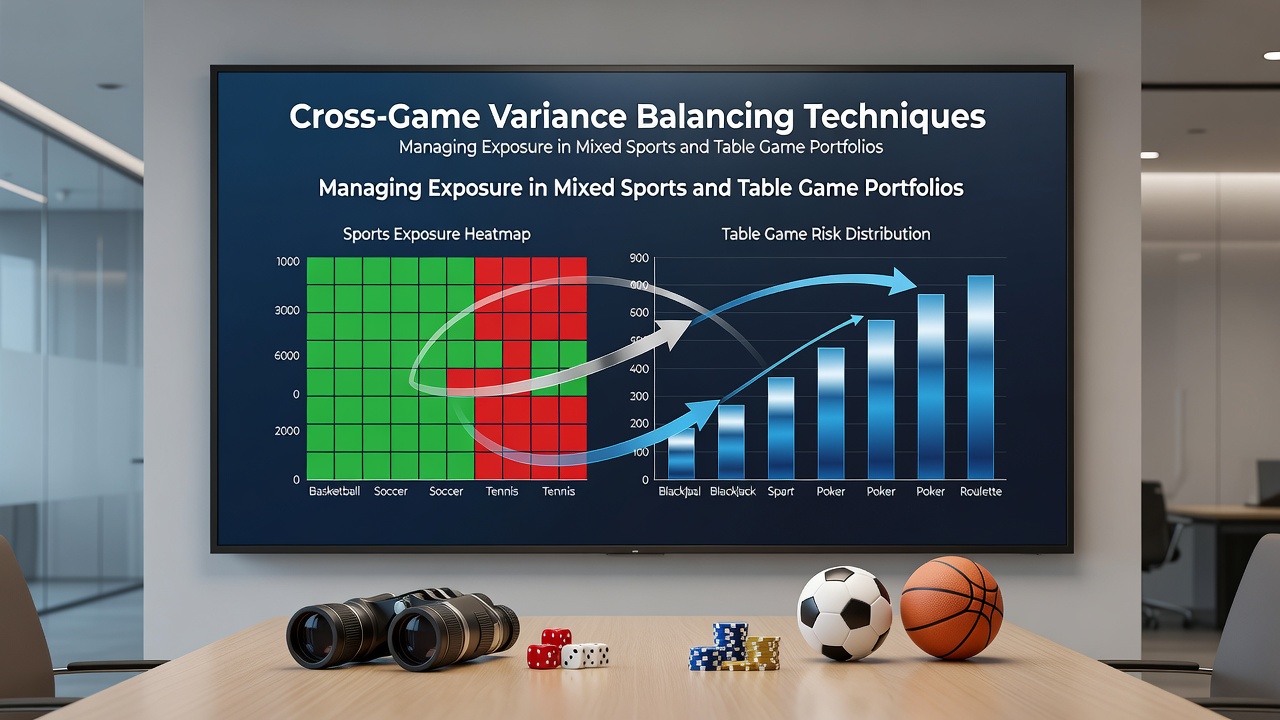
Effective management begins with mapping how different products move together during market stress. A sudden shift in a major league schedule might increase sports liability while table game play stays stable or even rises as customers seek alternatives. Observers note that calculating covariance between live sports markets and table game hold percentages allows operators to identify natural hedges. For instance, periods of high soccer volatility in European leagues sometimes coincide with increased roulette activity in online casinos, producing a modest negative correlation that reduces net exposure swings.
Position Sizing and Allocation Models
Portfolio managers apply scaled staking frameworks that account for both expected value and variance contribution from each vertical. Fractional adjustments to bet sizes help limit the impact of outlier results in high-variance sports while still capturing table game throughput. Studies from academic institutions demonstrate that portfolios rebalanced weekly using covariance matrices experience fewer breaches of internal risk thresholds compared with static allocation approaches. Operators track these metrics through real-time dashboards that flag when one category begins to dominate overall volatility.
One documented approach involves setting dynamic exposure caps that tighten during known high-variance windows such as playoff periods or major tournaments. These caps scale according to current portfolio correlations rather than fixed percentages. Figures reveal that such adaptive limits reduced maximum drawdowns by measurable margins in mixed portfolios during the first half of 2026.
Practical Hedging and Diversification Steps
Operators diversify across leagues, bet types, and game variants to lower aggregate variance. Including lower-volatility table game segments alongside marquee sports events spreads risk more evenly. Data shows that adding prop bets with independent outcomes can further dampen swings because these markets often display weaker correlations with main event results. Those managing such portfolios also monitor liquidity across channels so that rapid position adjustments remain feasible without excessive slippage.
Regulatory bodies in several regions publish aggregated performance data that helps operators benchmark their own variance metrics. Nevada Gaming Control Board reports provide monthly hold and volume figures that serve as reference points for North American operators. Similar datasets from other markets allow cross-regional comparisons that refine allocation decisions.
Monitoring and Adjustment Processes
Continuous monitoring relies on statistical process control methods adapted from manufacturing environments. Alerts trigger when rolling variance measures exceed historical norms for more than a set number of periods. Teams then review recent allocations and rebalance toward segments showing lower realized volatility. Research indicates that portfolios subjected to these structured review cycles maintain more consistent profit trajectories across seasonal cycles.
Software platforms now incorporate machine learning layers that forecast near-term variance contributions based on upcoming event calendars and historical patterns. These tools process large datasets to suggest allocation shifts before events begin rather than reacting after results arrive. Operators who integrate such systems report smoother equity curves, particularly when sports schedules overlap with peak table game hours.
Conclusion
Managing exposure in mixed portfolios demands ongoing attention to the distinct variance characteristics of sports and table games. Correlation mapping, adaptive sizing, and systematic rebalancing form the foundation of effective control. As data collection improves and modeling techniques advance, operators gain clearer visibility into how individual products interact within the broader book. This visibility supports decisions that keep overall risk aligned with operational targets while preserving participation across both verticals.