Dynamic Stake Adjustments for Drawdown Control in Poker Tournaments and Live Sports Markets
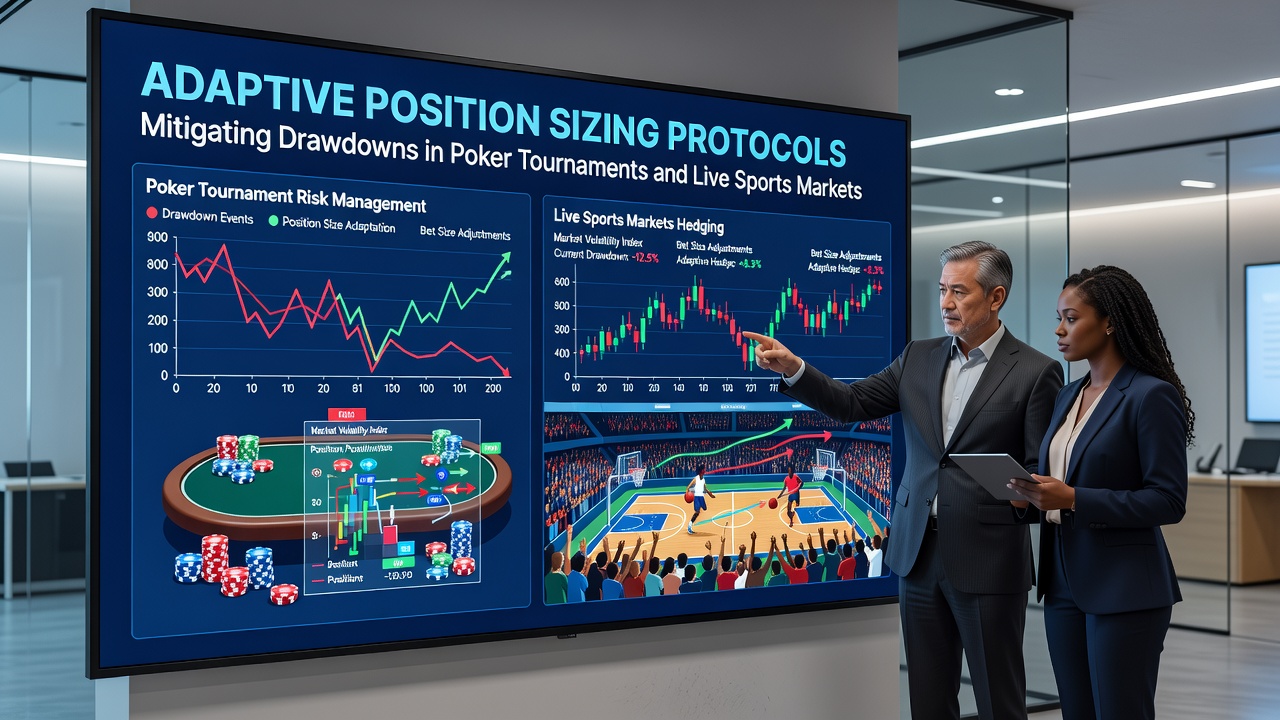
Adaptive position sizing protocols adjust bet or entry sizes based on current bankroll levels, recent performance metrics, and market volatility to limit the impact of consecutive losses in poker tournaments alongside live sports markets, and these methods rely on quantitative rules that scale exposure proportionally rather than applying fixed amounts across every opportunity.
Core Principles Behind Adaptive Protocols
Researchers developed these protocols from foundational work on bankroll management where position size changes according to drawdown thresholds, such as reducing stakes by a predetermined percentage once equity falls below 80 percent of peak levels, while data from multiple studies indicates that fixed sizing often leads to faster depletion during variance spikes whereas adaptive approaches extend session duration by recalibrating after each outcome or market shift.
Experts track metrics including maximum drawdown percentage, recovery time, and Sharpe ratios adapted for gambling contexts, and protocols integrate these figures to trigger automatic adjustments that prevent overexposure when live odds fluctuate rapidly in sports events or when tournament blinds escalate in poker settings.
Application in Poker Tournaments
Players apply adaptive sizing by calculating current stack relative to starting amounts and adjusting entry fees or re-entry allocations accordingly, for instance shrinking participation in side events once a 25 percent drawdown occurs while maintaining core tournament commitments at reduced levels until recovery milestones are reached, and this method draws from variance models that account for independent chip model calculations combined with historical payout structures across major circuits.
Observers note that tournament participants who recalibrate after each elimination or cash finish maintain longer runs through multi-day events because the protocols factor in escalating blind structures and opponent aggression patterns rather than relying on static percentages of total bankroll, and case examples from professional circuits show reduced bust rates when sizing follows a stepped reduction schedule tied to cumulative results instead of single-session performance.
Implementation Across Live Sports Markets
Live sports bettors integrate similar protocols by monitoring in-game statistics and adjusting wager amounts on evolving lines such as point spreads or totals, scaling down after a series of unsuccessful halftime adjustments while expanding exposure only when bankroll metrics return above predefined recovery bands, and this approach addresses the rapid odds movements common in soccer, basketball, and other timed events where momentum shifts create clustered loss sequences.

Analysts from the Canadian Centre for Gaming Research have documented how adaptive frameworks applied to in-play markets reduce peak-to-trough equity declines by incorporating real-time volatility inputs, whereas traditional flat staking leaves participants exposed during extended losing streaks that coincide with league-wide scoring trends or weather-related disruptions.
Technical Components and Adjustment Rules
Protocols typically incorporate fractional Kelly formulas modified for drawdown tolerance, where the base fraction shrinks automatically as current equity deviates from high-water marks, and additional layers include correlation adjustments between poker variance and sports market exposures when participants operate across both domains simultaneously, while software tools available through industry platforms execute these recalibrations without manual intervention after initial parameters are set.
Those who have studied implementation across regions report that combining stop-loss triggers with proportional scaling produces measurable extensions in operational lifespan, and figures from academic reviews at institutions tracking gaming mathematics confirm lower ruin probabilities when sizing adapts continuously rather than at fixed intervals.
Additional rules address position correlation by limiting aggregate exposure across simultaneous poker tables and live sports wagers, ensuring that a drawdown in one area automatically constrains activity in the other until independent recovery occurs.
Conclusion
Adaptive position sizing protocols establish structured responses to equity fluctuations that apply equally across poker tournaments and live sports markets through consistent application of drawdown-based rules and volatility monitoring, and ongoing refinement of these methods continues as new data sets become available from regulatory bodies and research centers worldwide.